



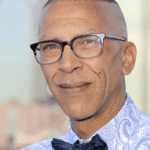
Michael Baskins
Collin Beachy

Christin Crabtree
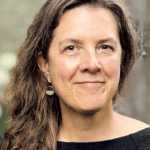
Stephanie Johnson
Four candidates are on the November ballot for two at-large seats on the Minneapolis School Board: Michael Baskins, Collin Beachy, Christin Crabtree and Stephanie Johnson. The Northeaster sent each a short questionnaire about their reasons for seeking office. Their answers have been edited for clarity and length.
Why do you want to serve on the School Board?
Baskins: I am deeply concerned about the lack of decisive leadership and transparency on the Minneapolis School Board. MPS has serious financial issues. Its educational performance is declining, ranking it near the bottom of the state. There is also declining enrollment and satisfaction with the quality of the education provided. MPS is not an easy district to lead with such huge disparities in the performance of its schools — MPS high schools include schools with near 70% student proficiency and others with 10% proficiency. These huge differences between our schools demand a focus on spending our budget where it is most impactful instead of upgrading empty schools or additional administrative positions. It also demands that MPS decentralize its approach to education and empower principals to lead but also be held accountable with clear metrics for success.
Beachy: I believe strongly in public education and in making sure every student has the opportunity to be successful. As a longtime educator, I’ve seen both what works in schools and where our systems need to improve. I want to bring that experience to the board and make decisions that put students first while also supporting our teachers, staff and families.
Crabtree: Public schools are essential to building the Minneapolis we deserve: A city where every resident can thrive. In 2022, I helped found Minneapolis Families for Public Schools, working alongside caregivers across Minneapolis to win the schools we deserve. Our organizing positioned caregivers to lead 3000 patrol shifts a week and distribute over $3.5M in mutual aid during Operation Metro Surge. I am ready to bring that same energy to our School Board.
Johnson: I want to serve my community and, more specifically, students, their families, teachers, building support staff, district leadership and all others directly impacted by Minneapolis Public Schools. Public schools should be beacons of light for not only the students enrolled, but also the community that surrounds and houses them. The time and resources we invest today will continue to serve all into many lifetimes.
What are your qualifications?
Baskins: I come to the School Board following over ten years as a design engineer and manager for automotive and aerospace companies like Polaris and Honeywell. I have led teams with disparate points of view, competing interests and different personalities. I have honed my ability to understand and break down hard problems while also finding solutions and building consensus behind those solutions. My work is highly data- and metric-driven. I have been heavily involved in local politics, politicalorganizing and local public policy over the years as well. I ran for City Council in 2023 and saw how local politics can be destructively ideological and combative. I can be counted on to bring an open mind to every discussion on School Board.
Beachy: I bring more than 20 years of experience as an educator, including extensive experience working with students with disabilities and students with significant behavioral and academic needs. I understand what decisions made at the board level actually look like in a classroom. As a school board member and chair, I’ve also gained experience with district finances, policy, staffing, community concerns, and working with people who don’t always agree. I think that combination of classroom experience and governance experience is valuable.
Crabtree: For over 20 years I have built relationships as an engaged parent and educator with the people who make MPS. I have been entrenched in community work, building relationships that give me the confidence and knowledge to lead at the district level. My commitment to our city and track record of results have fostered trust with neighbors and policymakers. I am ready to work alongside you to build the public schools our community deserves.
Johnson: I am 27 years into an education career with experience teaching K-12 in five different districts, including two in Minnesota. Though most of my tenure as an educator has been faculty at a community college, I have taught K-12 special education, English Language Learners, psychology, education (future teachers) and reading. In my college service, I have held leadership roles individually, by committee and shared governance.
MPS has financial problems. How would you address them?
Baskins: MPS’ financial problems need a long-term strategic approach. The School Board has avoided the reality that there was not going to be a near-term increase in students. They refused to cut costs or even provide a public analysis of options for cutting costs, to even consider closing and selling numerous empty or near-empty schools in the district until public pressure forced their hand this year. The Board needs financial plans with a longer view and to stop wasting taxpayer money upgrading and staffing double the number of schools of similarly sized districts. MPS is planning to build a new $100 million Anishinabe Academy during a period of financial crisis for the district.
Beachy: First, we have to be honest about the financial situation and make decisions based on accurate, transparent information. We need to distinguish between things we want to fund and things we can sustainably afford. I would look carefully at spending, staffing, programs, and administrative costs while protecting the things that directly affect students. I also believe we need to look for efficiencies before simply asking schools and classrooms to absorb additional cuts. And when difficult reductions are necessary, I think the board has a responsibility to explain why we’re making them and what the impact will be.
Crabtree: I bring fresh eyes and increased transparency to budgetary decisions. To rebuild confidence, MPS must strengthen internal controls, improve coordination across departments and effectively communicate with our community. Increasing enrollment is one piece of stabilizing our district; funding from the state is another critical path toward budget stability in Minneapolis and across Minnesota. State aid to MN public schools is 8.6% below what it was in 2003, ranking 26th nationally. Advocacy for bills that protect and invest in our schools must be a priority for the district.
Johnson: It is no secret that MPS has and continues to experience a real financial crisis and it is imperative decisions be made for the now and not what we dream MPS can someday be. This includes making responsible fiscal decisions with the understanding that money is real and gross errors impact not only schools and the district within, but taxpayers who also deserve a voice in such decisions.
Thoughts on closing schools?
Baskins: MPS has publicly stated over 30% of classrooms are empty. One local paper reported MPS pays over $20 million in yearly costs by keeping excess schools open. The School Board was supposed to publicly provide a report on the financial impact of closing and selling the excess schools in its inventory. Two years later, the public is still waiting for this report. Tens of millions have been spent on nearly empty schools such as the Wilder Complex, less than 20% occupied over the last handful of years. Students at the partially filled schools are denied the breadth of classroom and extracurricular opportunities as money is diverted to keeping the school open. We should be building the strongest ESL, special needs, advanced placement and extracurricular programs of any district in the state. Any closed schools should be shuttered after substantial public input and ensuring that those students are moved into schools that match their educational needs.
Beachy: I don’t believe school closures should ever be the first answer, but I also don’t think we should take them off the table. For the past two years, we’ve been having a larger conversation about what the MPS experience should look like for our students and what we need our schools to provide. We need to let the data guide us. We must look at enrollment, finances, academic outcomes, building capacity and, most importantly, what our students need. If the data tells us that we need to reorganize or consolidate schools in order to provide a stronger educational experience and a more sustainable district, then we have to be willing to have those difficult conversations. Closing a school is incredibly difficult for a community, so I don’t take that decision lightly. But our responsibility is to make the decisions that are best for students and for the long-term health of the district — not simply the decisions that are easiest.
Crabtree: Transformation of MPS must prioritize increasing enrollment through stability, trust and intentional outreach. Strategies such as expanding Pre-K and improving consistent school pathways can attract those who might otherwise open-enroll outside the district. Cuts and closures will not improve the health of Minneapolis; divestment is not a winning strategy for our future. We need a positive vision that reimagines how the district allocates resources to deliver the quality education Minneapolis deserves.
Johnson: Closing schools has to be on the table. We are years beyond the school board and superintendent mandating the Comprehensive District Design and ever since it seems district leaders have opted to look the other way rather than take on the truly tough decision to rightsize the district in terms of school buildings in relation to students served and staffing.
Only 39% of MPS students are proficient in reading. How do you propose boosting reading scores?
Baskins: There are huge differences between schools in terms of proficiency in reading and math. A one-fits-all approach to boosting reading scores is not possible. However, the READ Act was recently passed in Minnesota, requiring schools to renew their focus on phonics in reading education. Teaching with a focus on phonics in reading has shown strong results in Mississippi, but it does not move the needle without substantial resources for teaching assistants and interventionists in early education. I will focus on how we gather data on what is working and not working in our reading education throughout the district and then implement the lessons learned. It’s important to set clear goals for reading proficiency improvement in every school in the district and empower principals with the resources they need.
Beachy: We have to be honest about where we are, but I also think it’s important to recognize that MPS has already been making significant changes in how we approach literacy. Our Equity and Diversity Impact team is working to identify and deconstruct barriers to achievement, particularly for our Black and Brown students. We’ve also directed high-dosage tutoring to the schools and students who need the most support. At the elementary level, we’re moving toward culturally responsive curricula that are grounded in the Science of Reading, giving teachers stronger tools and a more consistent instructional foundation. But curriculum alone isn’t enough. We need to make sure teachers have the professional development and support to implement it well, that we are identifying students who are struggling early, and that we’re providing targeted intervention where needed. The goal isn’t simply to raise a number on a test. It’s to make sure more of our students become confident, capable readers — and that we’re closing the gaps that have persisted far too long.
Crabtree: Literacy is a shared priority and an issue of justice. Research shows the best way to foster literacy is through smaller class sizes. We must be serious about meeting needs; this includes contextualizing complex Minnesota Comprehensive Assessment data, prioritizing student-facing personnel such as educational support personnel and librarians, culturally responsive classrooms and housing stability for families. MPS scores just below the national average, which makes sense as Minnesota ranks 26th nationally for school funding. Our children deserve better, and that requires collective prioritization.
Johnson: There are many limitations to what a school board (member) can actually do and directly boosting, improving reading proficiency is one of them. That said, I am many years into being concerned about the reading skills students leave K-12 with and would, in all of the ways and means possible, make reading the most critical academic issue to address in our district.
Is there anything else you would like to tell Northeaster readers?
Baskins: I am committed to listening to the feedback of all parents in the district to ensure that I represent your students’ needs. I will be 100% transparent and demand the same from the administration.
Beachy: I care deeply about Minneapolis Public Schools and the students and families we serve. I’ve spent my career in education, and I understand the challenges facing our schools from the classroom level as well as from the board level. We’re facing some very difficult decisions, and I don’t think there’s a simple solution to everything. But I believe we can make better decisions when we’re honest about our challenges, listen to our community, use the data and keep the focus where it belongs: on providing our students with a high-quality education and giving them the opportunity to succeed.
Crabtree: Strong public schools are key to a strong Minneapolis. Minneapolis is a city that loves and cares about each other, and we show up time and time again to make that clear. We have proven to the world that we can win. Now is the time to bring that energy to our public schools.
Johnson: I have a vested interest in this district. And, though I have my own thoughts and story, I recognize it is a story among thousands. To help inform the school board’s decision making, I want to hear the stories and experiences of others. We need each other in this work to build a sustainable future for Minneapolis Public Schools.